




The Green Sheet Online Edition
February 9, 2026 • 26:02:01
How modern POS technology secures the storefront
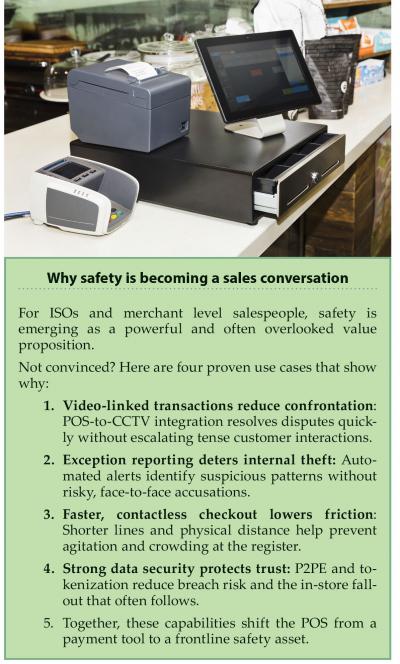
For decades, the primary pitch in the payments industry has focused on rates, transaction speeds and interchange optimization. However, the conversation between independent sales organizations (ISOs) and merchants is shifting. As retail crime evolves and workplace violence becomes a growing concern, business owners are prioritizing safety above almost everything else. For the savvy payment professional, the POS system is no longer just a cash register; it is the central hub of store security. Bridging the gap between payments and surveillance
The most tangible safety feature in modern POS software is the integration with closed-circuit television (CCTV) systems. This capability, often referred to as "text overlay" or "text insertion," acts as an impartial witness in the store.
In the past, reviewing security footage to catch a thief involved hours of guessing timestamps. Today's POS technology synchronizes the transaction log directly with the video feed. When a cashier scans an item, opens the drawer or processes a refund, that data is overlaid on the video recording in real-time.
For the merchant, this is a massive safety upgrade. It drastically reduces the need for confrontation. If a customer claims they handed over a $50 bill but were given change for a $20 bill, the manager does not need to argue on the sales floor, which can escalate into violence. They simply review the clip with the transaction data stamped on the screen. This indisputable evidence resolves disputes instantly and de-escalates potentially dangerous interactions.
Analytics, the silent watchdog
Internal theft, often called "shrinkage," is a major source of loss and tension within a retail environment. Confronting employees about suspected theft is dangerous and legally risky without proof. Modern POS systems utilize advanced exception reporting to identify fraud without the need for aggressive interrogation.
Sophisticated software now tracks specific keystrokes and transaction types to identify anomalies. The system monitors for excessive voids, price overrides, or no-sale drawer openings. If a specific employee ID is associated with a high volume of these alerts, the system flags it.
This technology creates a psychological deterrent. When staff members know the POS is monitoring for irregular patterns, the temptation to commit "sweethearting" (giving free items to friends) or outright theft diminishes. This fosters a safer, more transparent work culture where honest employees do not feel the stress of working alongside dishonest colleagues.
Speed and contactless as conflict resolution
While often discussed as a convenience, speed is a critical safety factor. Long lines and slow checkout processes increase customer agitation, which can lead to verbal abuse or physical aggression toward staff. Modern terminals that support rapid, contactless (NFC) transactions minimize the friction at the checkout counter. By reducing the time a customer stands at the register, the POS system naturally reduces crowd buildup and maintains a flow that keeps the store environment calm. Furthermore, allowing customers to "tap to pay" keeps a physical distance between the buyer and the seller, respecting personal space and reducing physical contact points.
Data integrity as the foundation of trust
Finally, safety extends to the digital realm. A store that suffers a data breach becomes a target for angry customers and potential litigation. POS systems equipped with point-to-point encryption (P2PE) and tokenization ensure that sensitive card data is never accessible in its raw form.
By securing the data, the merchant avoids the reputational damage and the hostile in-store encounters that often follow a public compromise of customer credit card information. 
Elie Y. Katz is founder, president and CEO at National Retail Solutions (NRS), https://nrsplus.com. Contact him by phone at 201-715-5179 or by email at ekatz@nrsplus.com.
Notice to readers: These are archived articles. Contact information, links and other details may be out of date. We regret any inconvenience.
