




The Green Sheet Online Edition
February 23, 2026 • 26:02:02
Why cross-border expansion requires a payment and banking strategy
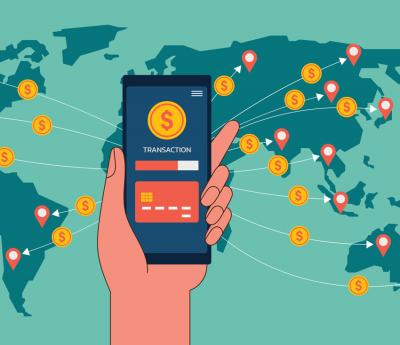
Every successful company reaches the point where it is time to expand: the domestic market is maxed out and the revenues feel stable. Time to grow! Usually, the first step is setting a marketing budget and creating a local landing page in order to test the market and wait for the first foreign customers to arrive.
However, this classic approach is no longer working. Why do so many companies miss the obvious point? How will these new clients actually pay for the offered goods or services?
The Paraguay expansion
One of our clients was a large online business that had great success in the European market. They only offered card payments, but their providers were reliable, and the payment success rate was well over 90 percent. Realizing the opportunities far beyond Europe, the group focused their attention on expansion into the booming Latin American market.
They launched a pilot program targeting a smaller country, which they randomly picked off the map (Paraguay), going with a modest marketing budget to test the waters. The goal was to quickly find a local LATAM payment partner who accepted major cards, covered all countries and kept similar success rates and fees. The company was completely unaware of the fact that the Latin American payment and banking landscape differed greatly from Europe. Processing options and potential fees vary largely country by country, and there was a much lower success rate on card payments. Less than 7 percent of Paraguayans owned a credit card in 2017, and more than 90 percent of businesses still used cash, while digital payment was still in its infancy.
The client realized that they needed to put a lot more planning into this project. New payment methods and mainly local cash meant that an increased amount of due diligence, testing, training, new fraud protection rules and revised pricing were needed. Many other operational, technical and financial aspects also needed to be reconsidered.
Eventually, we presented various payment processing options and potential fees throughout LATAM, country by country, considering all aspects of the operations and integration, but this definitely turned out to be a larger mission than what was initially planned. It was fortunate that the client didn't spend the marketing budget first to test the waters, and then look for payment and banking options, as we have seen happening many times before.
Classic business teachings do not fit the new environment
The problem is more common than we think, but it lies in the traditional business approach. The classic teachings exclude planning for cash flows first and focus on acquisition instead. However, collecting funds locally and transferring them back to the head office is no longer straightforward and can make or break any expansion.
Businesses are starting to realize that the days are long gone when they could just trust their banks and payment providers to "make things happen" and they did not need to strategize for these flows on their own.
The majority of global expansions fail because businesses still do not understand that they cannot use the same providers, banks and payment methods abroad as they used locally. According to Stripe, "around 65 to 70 percent of international expansions fail or underperform, often because companies assume that the same strategy, banks and payment methods that worked at home will work abroad, despite clear evidence that customers and infrastructure demand localized payment solutions." (See stripe.com/ie/resources/more/challenges-of-international-expansion-what-to-know-about-risks-taxes-and-payments.)
Today's payment and banking structures are built for a single jurisdiction, and foreign regulations and various customer behaviors are not discussed or considered enough. But what can we do?
When the infrastructure was built for a different game
Regulation and taxation are still based on the outdated approach whereby people live in the same country in which they were born and assumed to do business only locally. However, as the world became global, so did businesses, which means it is very hard to pinpoint where online businesses actually operate. Where does the director make decisions? Where is the company incorporated? Or where does it serve its customers?
Taxation arbitrage, where a company is set up in a certain country just to pay lower taxes but operates globally, is one of the major issues today. As banks and financial institutions are the "policemen" of the economy, aimed to filter and block all such questionable activities, this creates a regulatory and taxation discrepancy between local and global fund movements.
Financial regulators mirror these systems: domestic payment methods and providers are built to satisfy the local regulator and customer behavior but might fail when global transactions take place. Once the same infrastructure has to handle multi-currency flows, various fraud settings, or reporting according to local data requirements, the problems start to appear.
Of course, these issues are never communicated up front, so merchants can easily find themselves in a situation where they need to firefight problems they have never before needed to anticipate, plus they are the ones facing lost revenue.
Moreover, many of the providers and banks build their risk portfolios individually, which means that they all evaluate dispute ratios, business activities and the risk for wrongdoing subjectively; therefore, a setup that might have appeared low risk in one country can move into a higher monitoring category once additional regions enter the flow, even if the product or service itself remains identical.
This transition frequently results in increased rolling reserves, higher merchant discount rates, complications around onboarding or even straight blocked or frozen accounts, which all place operational pressure on businesses that have never seen this coming.
Predictable patterns across markets
Several patterns repeat when it comes to payments and banking; however, not many realize them from the beginning.
- Checkout friction as well as disputes increase when pricing remains anchored in a foreign currency but is paid in another, simply because the customer is facing different pricing than expected only at the payment page. When preferred local methods such as UPI in India, Pix in Brazil, or iDEAL in the Netherlands are absent at the checkout page, customers can rightfully feel disappointed, which directly affects authorization rates and conversion performance.
- Settlement timelines add another layer of difficulty because a company built around near-instant or next-day cycles can suddenly face serious cash flow problems when multi-day holds become the norm. That shift requires strategic working capital planning, including access to bridge financing or expanded cash flow buffers.
- Success carries inherent risk, too: a sudden volume spike in a newly activated region, for example, often triggers enhanced monitoring, which might result in temporary suspension of services, leaving growth focused teams managing regulatory and liquidity challenges they have never been trained on instead of scaling operations.
- Sanctions screening and geopolitical sensitivity, even if it comes down to reputational damage only rather than legal or financial consequences, further intensify scrutiny. This is because even legally viable activities can intersect with restricted counterparties through correspondent routes, pressuring providers to prioritize their own regulatory protection over merchant convenience.
- Several countries now require transaction data to be stored locally or to be reported in a specific format to domestic authorities. When an international merchant uses a foreign gateway that does not comply with local storage or reporting rules, the responsibility does not disappear: it falls on the merchant. Since this type of situation is not usually strategized for, the solution is adding various tools at the last minute in a panic to comply. This is not only significantly more expensive but also opens its own Pandora's box of problems later.
- The most common issue of all is seeing a holding structure that was originally designed for tax optimization. Unfortunately, tax advisers do not understand how banks think and are therefore unable to anticipate that banking risk appetite is completely different from legality: a setup perfectly justified by various legal opinions does not mean banks or payment providers are happy to serve such a setup. And if they do – it will be very expensive.
Banks and financial institutions evaluate not only the product or service offered but also the ownership chain, director profiles, source of funds documentation and the jurisdictions involved.
These are only a few examples to consider, but setting up an overall payment and banking strategy that considers all areas is extremely complicated and, with the classic business departmental setup, cannot be handled efficiently.
The illusion of simply adding more methods
A frequent reaction to handling such complications is to add more payment and banking solutions, hoping it will sort out the issue. However, nothing could be further from the truth. Payment and banking today impact customer experience, risk management, technology, product development, data security, compliance, finance and more. It should be considered a standalone function, an essential element of the business strategy, not just a part of finance.
Fintech is innovating with extraordinary speed, but expecting an external provider or bank, whose revenue is directly linked to processed volume, to deliver fully independent guidance that is fully aligned with the long term organizational strategy is not realistic.
All private companies' commercial models are built around growth and revenue, not around protecting their clients' structure. They all promise efficiency and profitability, yet the responsibility of selecting and integrating these tools still remains with the business. Unfortunately, today many businesses are considering the issues only on a surface level, while the underlying legal exposure, regulatory obligations, capital flow restrictions and various international risk appetites remain unaddressed.
The untold risk of payment orchestration
Another growing illusion is that payment orchestration platforms replace strategy, because many teams assume that layering orchestration on top of existing providers will automatically resolve all issues.
In reality, orchestration only optimizes routing between multiple acquirers, reporting and fraud handling, but it is entirely separate from all other aspects of the organization's requirements such as legal structuring, regulatory interpretation, sanctions exposure, capital control management, correspondent banking expectations, risk, data security, integration issues and more.
An orchestration layer does not renegotiate your fees or terms and conditions, nor does it determine the right risk appetite or conduct due diligence on new payment and banking partners. Without a solid payment and banking strategy underneath, orchestration simply accelerates volume through the same structural weaknesses rather than correcting them.
Planning as the first step
When payment and banking decisions are outsourced without strategic ownership, the merchant becomes reactive instead of proactive, and the expansion that was meant to generate growth slowly turns into operational firefighting driven by other people's commercial incentives rather than by the company's own risk and governance standards. All adjustments made after launch carry significantly higher financial and operational costs and risks, compared to designing the structure correctly from the outset. Retrospective legal review and system redesign under time pressure is far from ideal,
International companies have to treat payment and banking as the base infrastructure that supports the entire organization. All growth plans have to align with the banks' and providers' subjective criteria , which change all the time: new tools are born, regulations change and tech is changing.
Payments and banking planning is complementary to the Treasury function; it does not replace it. Chief payment officers work at the intersection of multiple departments and monitor regulatory updates, fintech innovations, sanctions lists, best practices, and technology in alignment with the business, rather than reacting to issues. They can differentiate issues and opportunities between domestic and cross-border activities, allowing corrective action before provider risk teams intervene.
The future
International businesses can only be successful if they understand that payment and banking planning is not an afterthought but a strategic discipline. Cross-border growth is about designing the financial arteries of the organization in advance and then building operations around it, in line with regulation, correspondent banking expectations, customer preferences, sanctions, liquidity planning, technology, data security, various taxation environments and risk appetite.
The chief payment officer function is becoming more common within international setups for obvious reasons: this role works on extremely rare skills between legal, product, risk, technology, customer experience and finance, while ensuring that payment and banking decisions are aligned with the company's long term objectives.
A chief payment officer continuously evaluates the ever-evolving fintech market and taxation changes, sources new providers, monitors regulatory changes, understands risk and technology, and sets the right expectations for international growth. In today's global environment, strategizing payment and banking is foundational to sustainable international growth. Tools are only as good as we know how to use them. 
Viktoria Soltesz is the CEO and founder of PSP Angels and The Soltesz Institute. She is a leading advocate for strategy-led financial operations, ethical industry practices, and structured education in an area too often overlooked in traditional business training. PSP Angels is a globally awarded, independent payment and banking consultancy that has supported over 1,000 companies in building scalable, secure financial infrastructures. The Soltesz Institute is the first and only independent online organization offering EU-accredited training and certifications focused exclusively on payments and banking. To contact Viktoria, please email viktoria@pspangels.com.
Notice to readers: These are archived articles. Contact information, links and other details may be out of date. We regret any inconvenience.
