




The Green Sheet Online Edition
July 27, 2026 • 26:07:02
Why agentic commerce is creating a new category of dispute
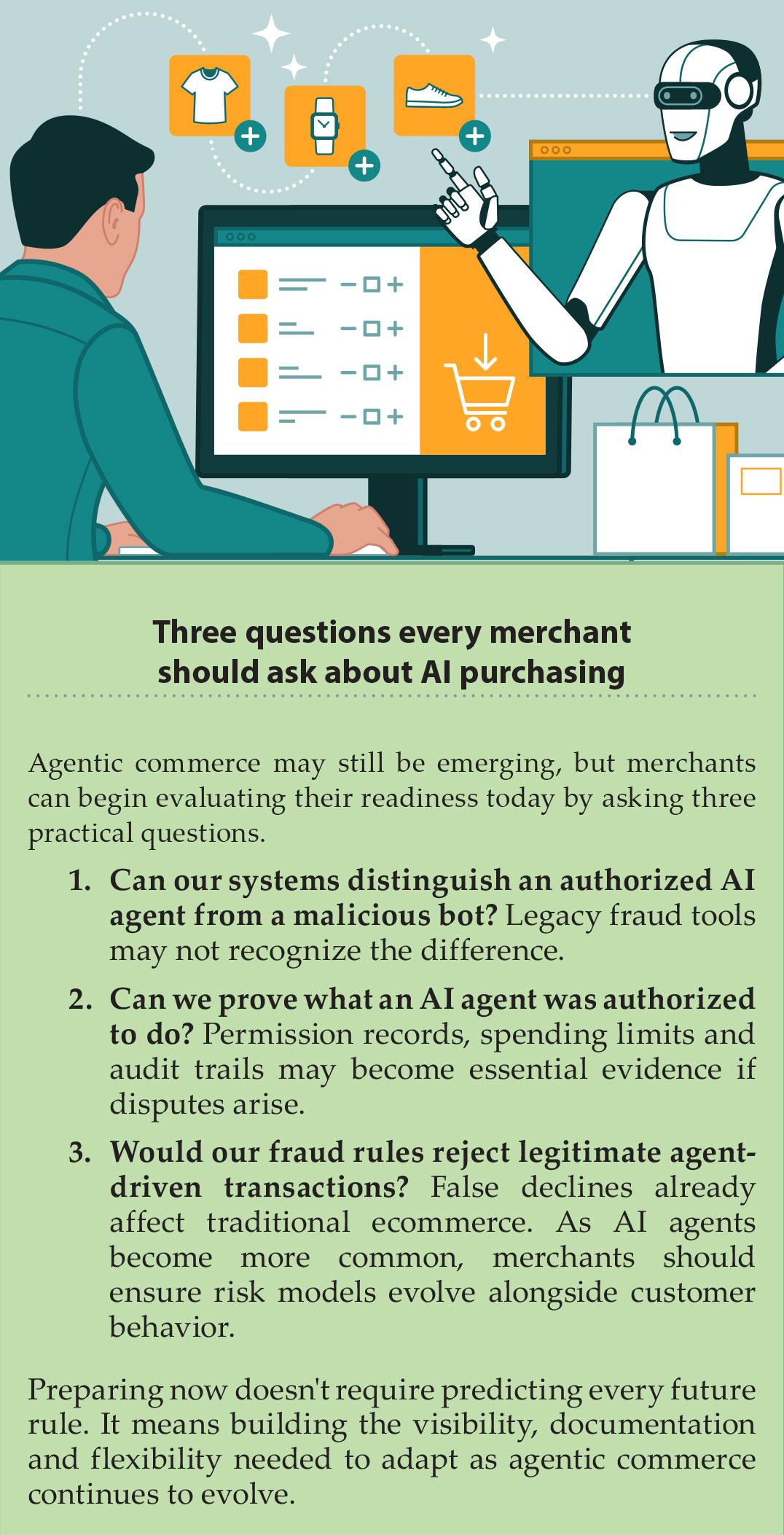
For fifteen years, I have watched the chargeback landscape evolve in ways that much of the payments industry failed to anticipate. Friendly fraud, first-party misuse, consumers disputing transactions they simply do not recognize. Each shift created new pressure on merchants, new blind spots in fraud systems and new questions around who should ultimately bear the cost.
What is happening with agentic commerce is categorically different. AI agents are rapidly moving from recommending purchases to executing them. Visa has already completed secure agent-initiated transactions with partners, while Mastercard is expanding its own agent payment infrastructure through Agent Pay.
Platforms including Perplexity, Amazon and Walmart are also exploring ways for AI to transact directly on consumers' behalf. The infrastructure is developing quickly, but the rules governing disputes are struggling to keep pace.
A fourth category of dispute
For most of the history of card payments, disputes have broadly fallen into three categories: criminal fraud, merchant error and buyer's remorse. Each has established rules, evidence requirements and liability paths. The system is imperfect, but it follows a recognizable logic.
Agentic commerce introduces a fourth scenario that does not fit neatly into any of those categories. The card was not stolen. The merchant did not necessarily make a mistake. The AI agent may have acted exactly as authorized. Yet the customer looks at the transaction and says: "I didn't want that."
Perhaps the agent renewed a subscription automatically. Perhaps it selected an alternative product, reordered an item no longer needed or booked travel that technically matched a schedule but not the customer's preferences. From the system's perspective, the transaction may appear entirely legitimate. From the customer's perspective, however, the outcome feels wrong. And when a transaction feels wrong, many consumers instinctively turn to the dispute process.
Traditional chargeback evidence such as authentication checks, delivery confirmation and device fingerprints was designed around human behavior at the point of transaction. Agent-initiated commerce requires something fundamentally different: evidence of what the customer authorized the agent to do, what limitations were in place, how decisions were made and when consent was provided.
That evidential framework does not currently exist by default. Merchants, issuers and platforms will need to build it deliberately.
The problem no one is talking about
Much of the industry conversation has focused on the obvious risk: consumers disputing AI-initiated purchases they genuinely did not intend to make. That challenge is real and it will grow. But there is another issue emerging much earlier in the transaction lifecycle that deserves far more attention.
Legacy fraud systems are already blocking legitimate agentic transactions before they are completed. Most fraud tools were built to detect suspicious human behavior through unusual devices, abnormal purchasing patterns or inconsistent session activity.
A legitimate AI agent and a malicious bot can appear remarkably similar to systems that were never designed to distinguish between the two. The challenge is no longer simply detecting fraud, but differentiating between malicious automation and legitimate delegated purchasing behavior.
The result is an increase in false declines: authorized transactions rejected by systems attempting to prevent fraud. False declines do not generate chargebacks, but the commercial consequences are immediate. Merchants lose revenue, damage customer trust and risk becoming invisible to AI agents that learn over time which merchants consistently reject transactions.
In an agentic commerce environment, invisibility to those agents may become a competitive disadvantage that compounds quietly until it becomes significant.
According to the Global Ecommerce Report 2026, agentic commerce could account for 25 percent to 30 percent of all global online purchases by 2030. Many merchants still lack the internal visibility required to fully understand and manage emerging agentic commerce behavior independently, particularly as transaction patterns grow more complex across channels and regions.
I am already seeing growing concern about how agent-initiated transactions will be identified, monitored and defended when disputes arise. The industry response is increasingly focused on bringing together dispute, fraud and transaction data in real time so that emerging risks can be identified earlier and addressed before they escalate into chargebacks.
What merchants need to do now
The window to prepare is narrow. First, merchants should establish far more granular permission frameworks for any AI agents transacting on their platforms. Broad or vague consent will not be sufficient. Businesses need clarity around what an agent is permitted to purchase, what spending limits apply, what merchant categories are authorized and what fallback actions should occur when ambiguity arises.
Second, organizations should invest in evidence capture and audit infrastructure that records agent permissions alongside transaction activity. In an agentic dispute, the evidential anchor is no longer a single real-time authentication event. It is a verifiable record of prior consent, delegated authority and transaction intent. Without that framework, merchants may struggle to defend disputes effectively.
Third, merchants should review fraud detection rules and risk thresholds to account for the behavioral differences between human and agent-driven commerce. Research from PSE Consulting found that among UK shoppers planning to use AI for purchases, 85 percent said they would trust an AI system to place orders and execute payments on their behalf—a signal of how quickly consumer readiness is outpacing merchant infrastructure.
AI agents will behave differently from consumers in ways that may consistently trigger legacy fraud models if those systems are not adapted accordingly.
This challenge is unlikely to emerge uniformly across markets. Adoption rates, regulatory expectations and consumer trust in AI-assisted purchasing will vary considerably between the US, UK and key international markets. Businesses operating globally will need to monitor those regional differences closely.
The broader obligation
Agentic commerce is not something the industry should resist. The prospect of frictionless, highly personalized and autonomous purchasing offers genuine opportunities for consumers, merchants and the wider payments ecosystem alike. But opportunity and responsibility arrive together.
The payments industry built dispute systems to protect consumers. As AI-driven commerce expands, those protections will need to evolve to reflect a world where the "consumer" at the point of transaction may increasingly be a machine acting on someone's behalf.
The question of who ultimately bears liability when an AI agent makes a purchase the customer later disputes remains unresolved at the network level. Until clearer standards emerge, merchants that fail to build robust permission, monitoring and evidence frameworks around agent-initiated commerce are likely to remain exposed. 
Monica Eaton is the founder and CEO of Chargebacks911 and Fi911, as well as Chief Information Officer of Global Risk Technologies. Monica has worked tirelessly to educate merchants and financial institutions about hidden threats in the rapidly changing payment fraud landscape. For more information, visit www.chargebacks911.com, https://fi911.com/ or reach out via LinkedIn at linkedin.com/in/monicaeatoncardone.
Notice to readers: These are archived articles. Contact information, links and other details may be out of date. We regret any inconvenience.
